
USB 3.0/USB 4.0 is officially cancelled
Anyone who has come into contact with electronic products, I am afraid the most familiar interface is USB.
In the USB 3.0 era, USB interface naming began to appear unprecedented confusion, at first USB 3.0, USB 3.1 to USB 3.2 such evolution, and later was collectively changed to USB 3.2 GenX.
After USB 3.2, it should be USB 4.0. However, the official organization has made a new move, naming the latest USB interface USB 4.0 V2, and the speed has reached 80Gbps. The naming of the USB interface is getting more and more confused. It may be that the official organization itself can't stand it, so it has changed the naming of the USB interface again. But this time, it is finally clear, so that people can know what the performance of their USB interface is at a glance.
Specifically, the USB-IF organization has two key changes in naming. One is to officially delete the commercial naming method of USB 3.x/USB4, and the other is to cancel the SuperSpeed USB brand. From now on, the USB interface will be named directly in the way of USB+transmission rate, that is, in the future, we will know the transmission rate of the USB interface directly from the USB interface name, so we don't have to struggle anymore.
Perhaps deciding to learn from the past, the USB-IF group has now made two major decisions, officially removing the commercial naming of USB 3.x/USB4 and cancelating the SuperSpeed USB brand.
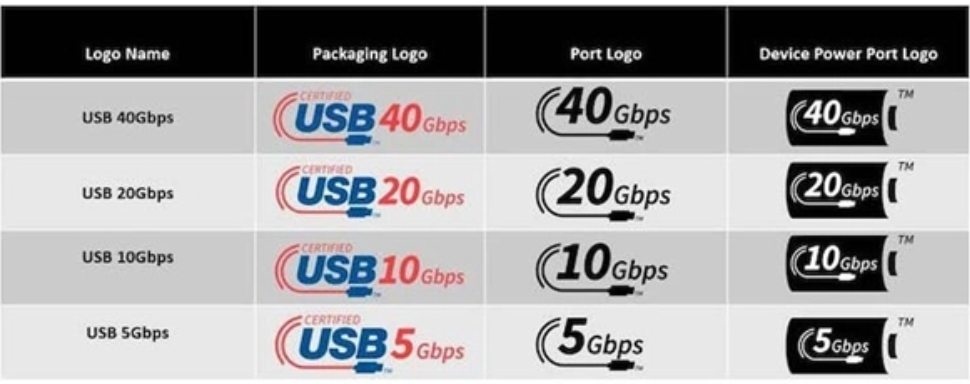
Now, USB 3.x and USB4 will change to the "USB+ transfer speed" designation, namely USB 5Gbps, USB 10Gbps, USB 20Gbps, and USB 40Gbps. Because USB4 v2.0 is still in draft form, it has not been officially named, but it will eventually be called USB 80Gbps.
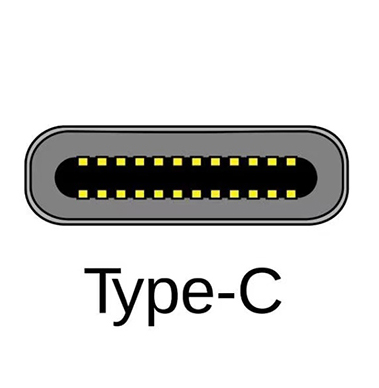
In this way, the existing USB interfaces will be named USB 5Gbps, USB 10Gbps, USB 20Gbps and USB 40Gbps. The USB 4.0 V2 that was drafted before has not been named yet, but it is estimated that it will be USB 80Gbps. Of course, all new interfaces will be Type-C, which has not changed. The new naming rules will be applicable to various printing scenarios such as interfaces, cables, packaging, etc. If it is a fast charging device, the maximum power must also be marked.
This change is undoubtedly friendly to users. The past naming method is easy to be confused, and users cannot intuitively understand their products, so it is better to mark them directly. However, the old USB 1.0 and USB 2.0 will not change, because the performance of these two old USB interfaces is really weak. The transmission speed of USB 2.0 is only 480Mbps, so there is no need to change. In addition, the 480Mbps USB interface seems to be a little longer.
However, the problem has not been completely solved. Although the USB IF organization makes the naming of USB interfaces more simple and clear, they also have no restrictions on manufacturers. Because USB is an open standard and does not force manufacturers to use any name, manufacturers can use any name they want. That is, manufacturers will continue to use USB 3. x/3.2 GenX/USB 4 or even USB4 v2.0 in the future, which is also the freedom of manufacturers. However, we estimate that more manufacturers will still use the USB+transmission rate. It is reported that the new naming method will be adopted from the fourth quarter. At least many manufacturers of Intel's Z770 motherboard will use the new naming method.
The question is, what about USB 2.0?
Usb-if explained that because USB 2.0 transmission speed is only 480Mbps, IF it is also changed to USB 480Mbps at the same time, the latter number is too large to mislead some users, so USB 2.0 and USB 1.0 continue to be retained.
According to the idea of USB-IF, it is easy to confuse the use of generational naming, which is not as intuitive as directly marking the speed. The new naming rules will apply to various printing scenarios such as interfaces, cables, packaging, and IF it is a fast charging device, the maximum power must also be marked.
This seems more intuitive, but don't be happy, more messy things are ahead.
Because USB is an open standard, not a mandatory standard, there are no restrictions if manufacturers want to continue to use USB 3.x/3.2 GenX/USB 4 or even USB4 v2.0...
The current plan is that the new naming will begin to take effect this quarter.